

Manufacturing process
Every piece of jewelry from evior is handcrafted with the utmost care and attention to detail.
Our goal is not only to create beautiful jewelry but also to ensure that each piece meets the highest ethical and quality standards.
Our jewelry is made in Germany, in the Allgäu region. Here, evior works closely with a renowned goldsmith who individually crafts each piece. This artisanal approach guarantees not only the highest quality but also the uniqueness of each individual piece of jewelry.
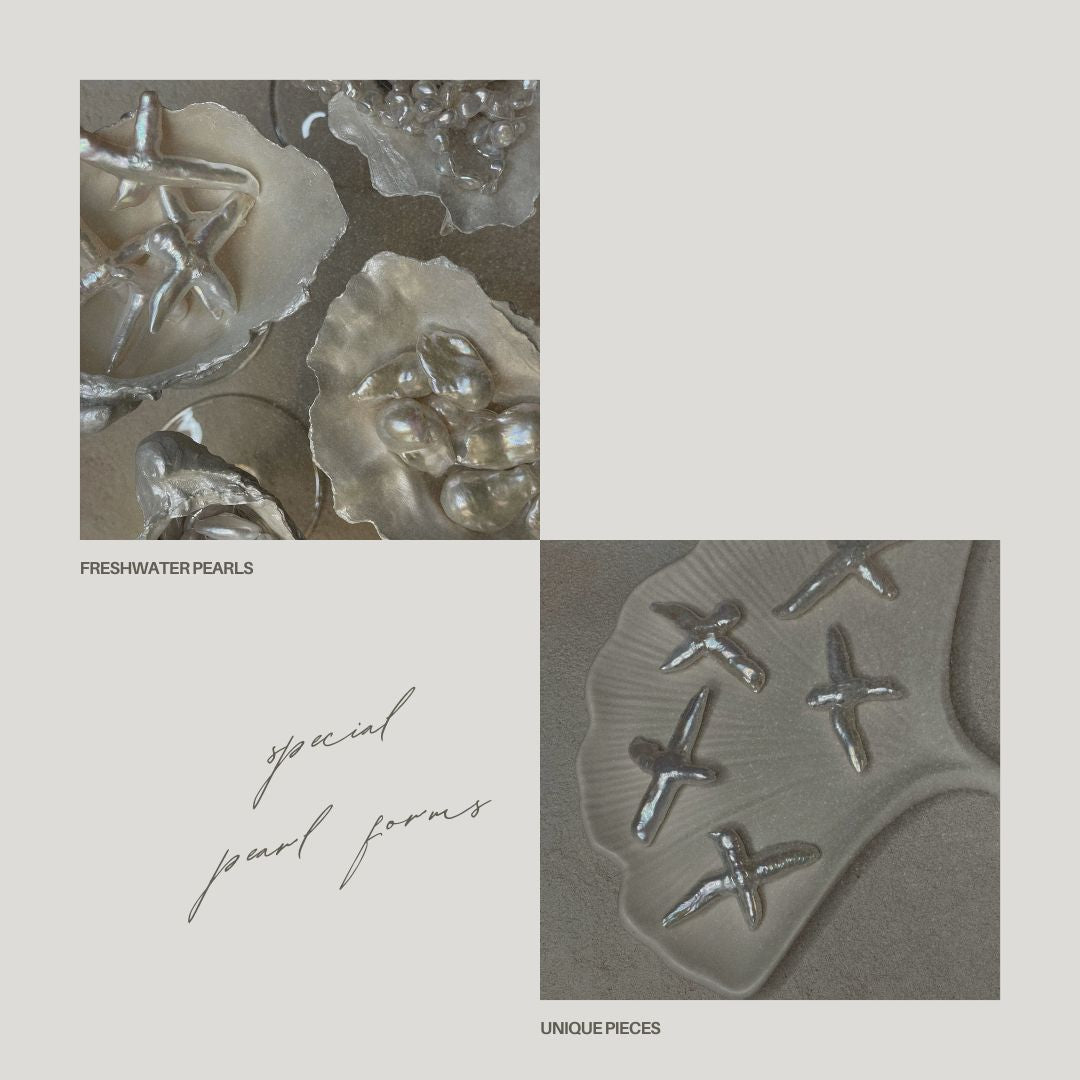
Forgoing mass production is particularly important to us.
Each of our jewelry pieces is created in a small, yet exquisite edition and crafted with the utmost care and dedication. This ensures that every piece receives the attention and detail it deserves, and that our customers receive a product that is unique in both its beauty and its origin.
Through this conscious, artisanal approach, we aim not only to offer high-quality jewelry but also to embody the values of sustainability and ethical production. evior jewelry pieces are not just accessories; they are an expression of a conscious lifestyle that values quality, individuality, and ethics. Each piece is meticulously crafted to ensure it is as unique as the person who wears it.
The Fascinating World of Pearls
A Brief History of Pearls
The history of pearls dates back thousands of years. Even in ancient times, pearls were considered valuable possessions and were kept in royal treasuries. The ancient Egyptians adorned themselves with pearls, which were seen as symbols of the moon and immortality. In the Renaissance, pearls were so precious that they were reserved exclusively for royalty. Today, pearls are a symbol of timeless elegance and are cherished and worn all over the world.
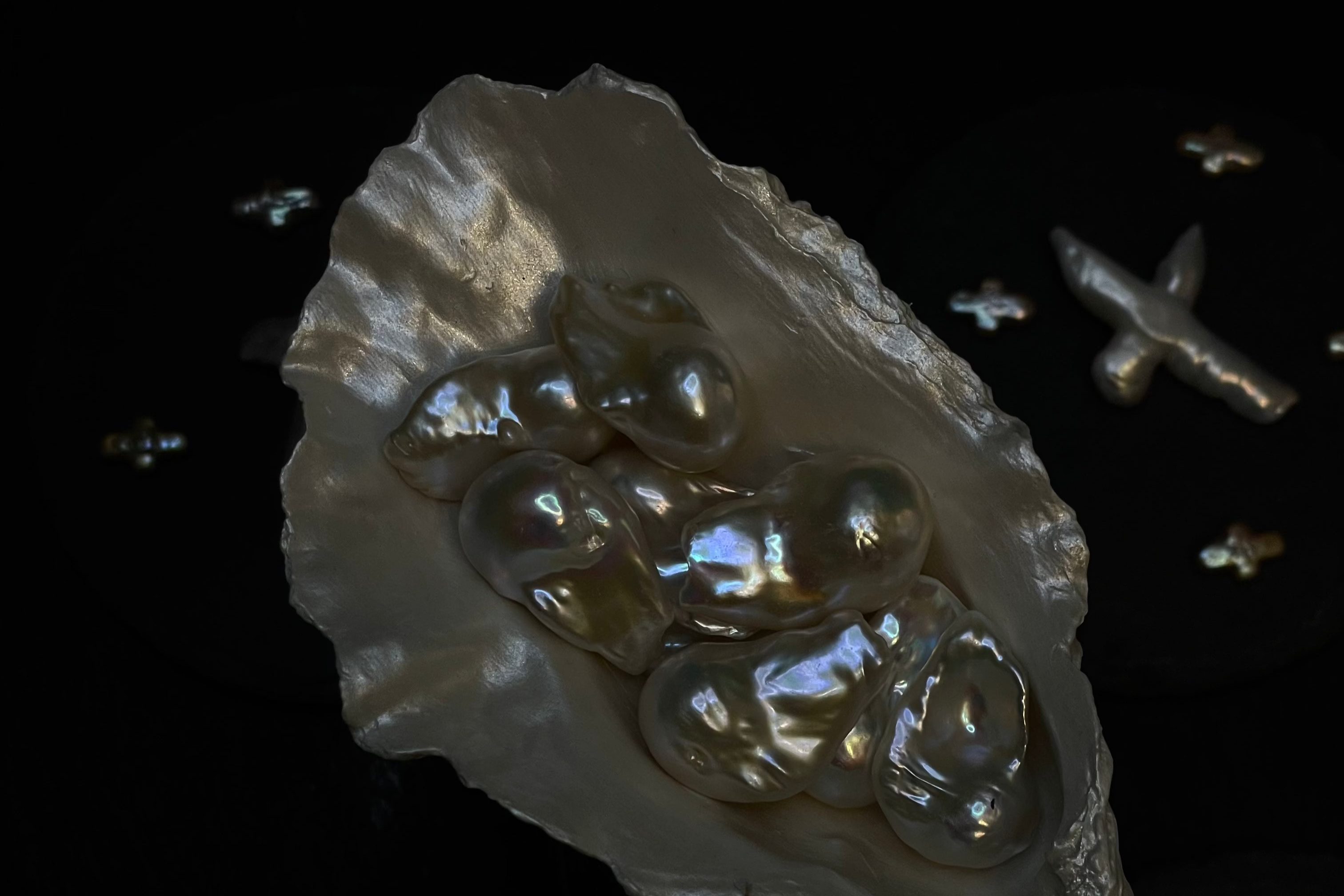
Our Ocean Whisper collection honors this rich tradition and expresses the natural beauty of pearls in modern, versatile designs. Each piece tells a story of elegance and nature, combining traditional craftsmanship with contemporary style. Whether in the form of a delicate freshwater pearl or a striking baroque pearl – our collection celebrates the diversity and uniqueness that each pearl brings. Their creation is a true wonder of nature, lending each piece of jewelry a special, timeless beauty.
How are pearls formed?
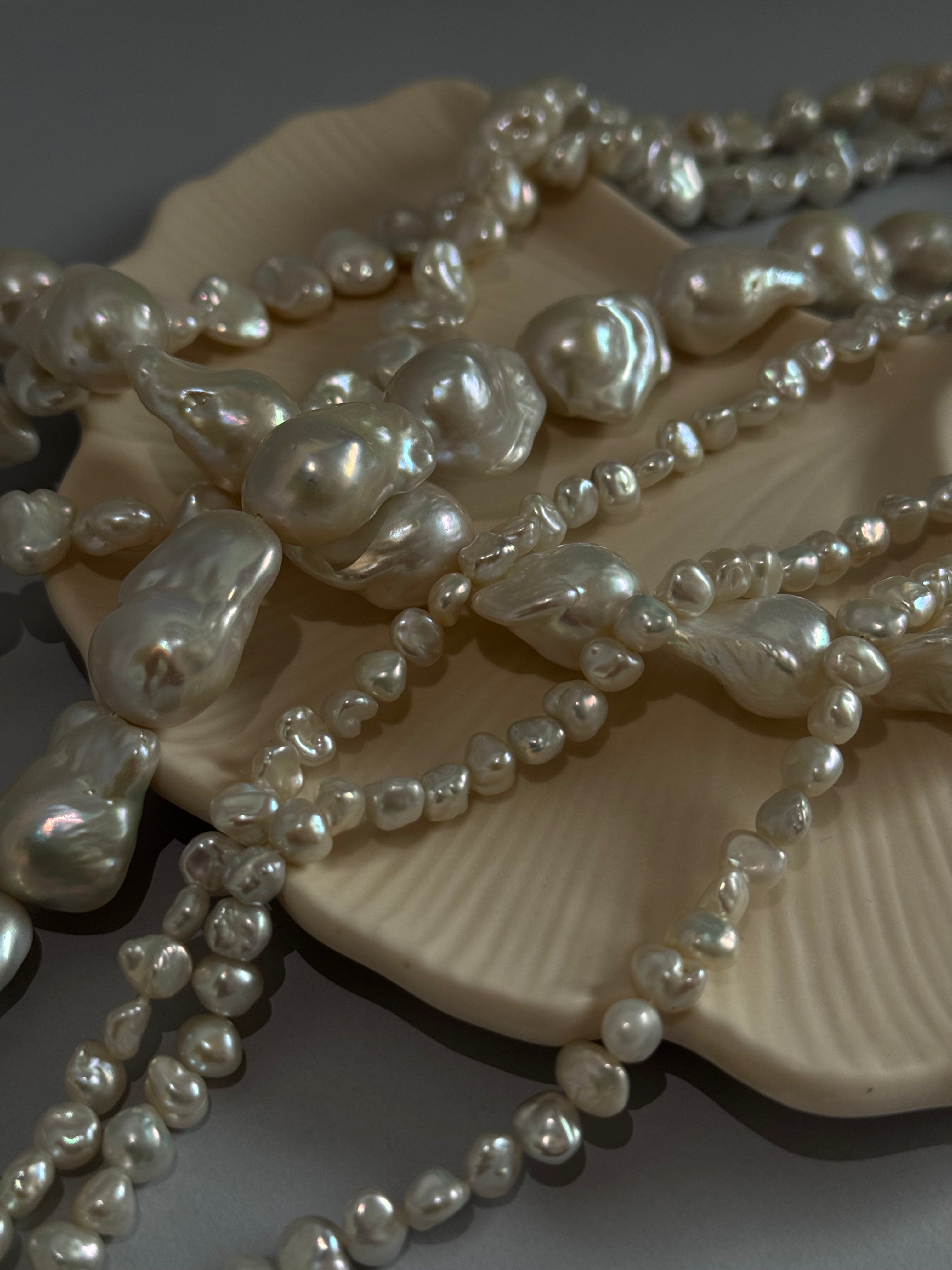
Pearls are formed in mussels and oysters that live in saltwater or freshwater. The process begins when a foreign object – like a grain of sand or a small particle – enters the interior of the mollusc. To protect itself from this intruder, the animal secretes layers of nacre, a lustrous, protective material that coats the foreign object. Over time, this process creates the shimmering pearls we value so much.
Cultured pearls are formed through a similar, but controlled, process to natural pearls. In cultured pearl production, a small foreign object, often a tiny piece of nacre or a tissue sample, is deliberately inserted into the mollusc. This process is called "nucleation." Just as with natural pearls, the animal then begins to form layers of nacre around this nucleus to isolate and protect the intruder.
The exact process of cultured pearls:
- Implantation: In a controlled environment, the nucleus is manually inserted into the mollusc. This requires precision, as the nucleus must be carefully placed in the correct location.
- Pearl Formation: Once the nucleus is implanted, the mussel or oyster begins to coat the foreign material with layers of nacre. This process can take months to years, depending on the size of the desired pearl.
- Harvesting: After the pearl has grown, the mollusc is carefully opened and the pearl is removed. Mussels can often be reused after harvesting to cultivate another pearl, making them a valuable part of the process.
Various Types and Shapes
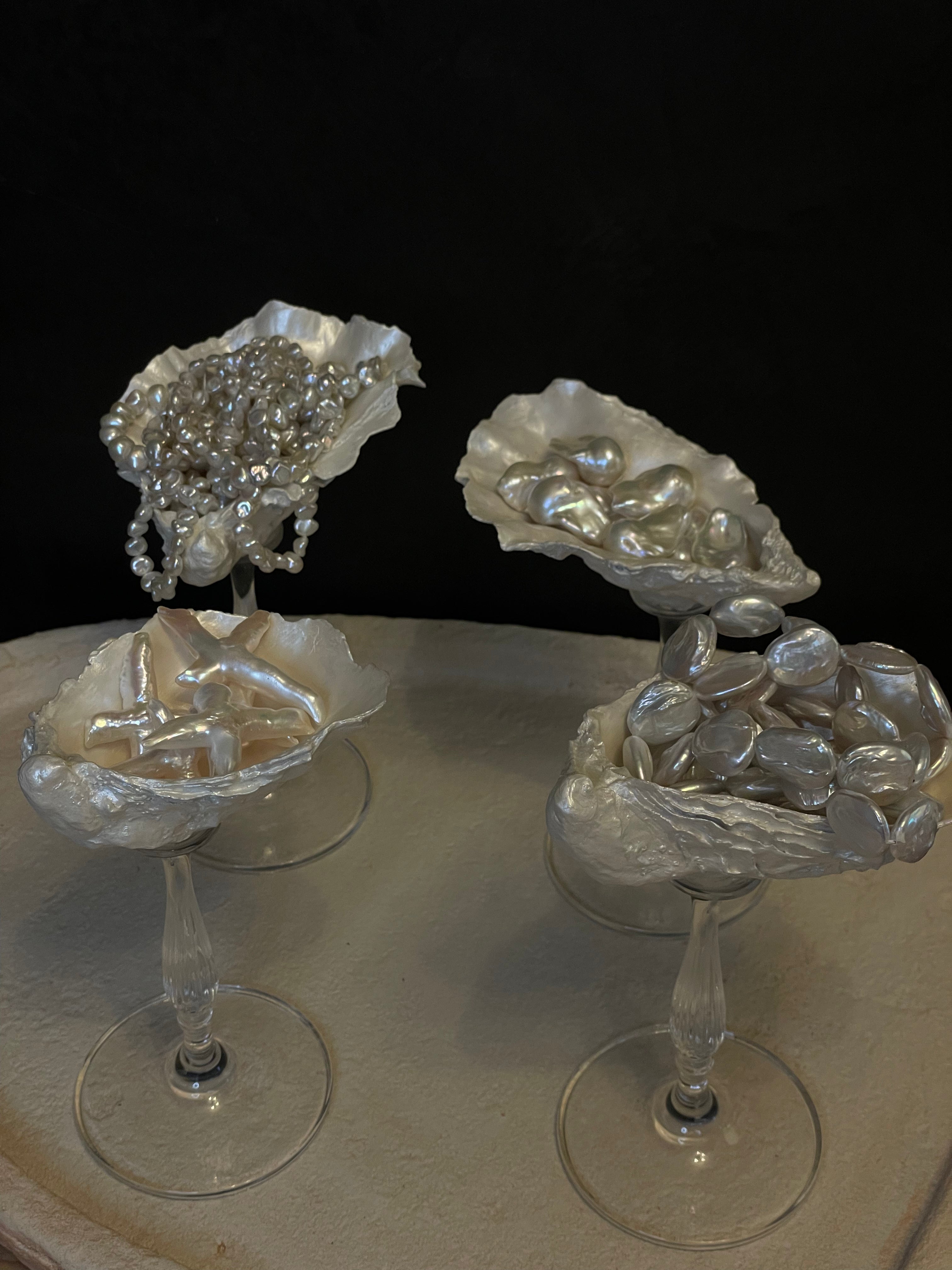
Not all pearls are alike – they differ in color, shape, size, and origin. Freshwater pearls, like those used in our collection, form in rivers and lakes and often exhibit a greater variety of shapes and colors than saltwater pearls. Saltwater pearls, which grow in oceans and seas, are often rounder and have a more intense luster.
The shapes of pearls also vary greatly: from perfectly round pearls to tear-drop shaped, baroque, or cross-shaped pearls – each shape tells its own story. Baroque pearls, for example, are irregularly shaped and exude a wild, natural beauty, while round pearls are considered the epitome of classic elegance.
Where Do Pearls Grow?
Today, pearl farms can be found in many parts of the world. Freshwater pearls are primarily cultivated in China, while saltwater pearls originate from regions such as Japan, Tahiti, and Australia. Each region produces its own characteristic pearls, which differ in their color, size, and luster.